
Custom acrylic markers exported from China generally require CPSIA, ASTM D4236, EN71-3, REACH, and heavy-metal limits testing to legally enter the U.S. and EU markets.
For importers looking for full guidance on manufacturing options and choosing reliable partners, see complete guide to oem/odm and choosing reliable manufacturers for custom acrylic markers from china Markers from China.
CPSIA Is the Primary Certification Required for Custom Acrylic Markers Entering the U.S
CPSIA applies because acrylic marker products are often considered potential children’s products in the U.S. and must meet strict requirements on lead, phthalates, and traceability.
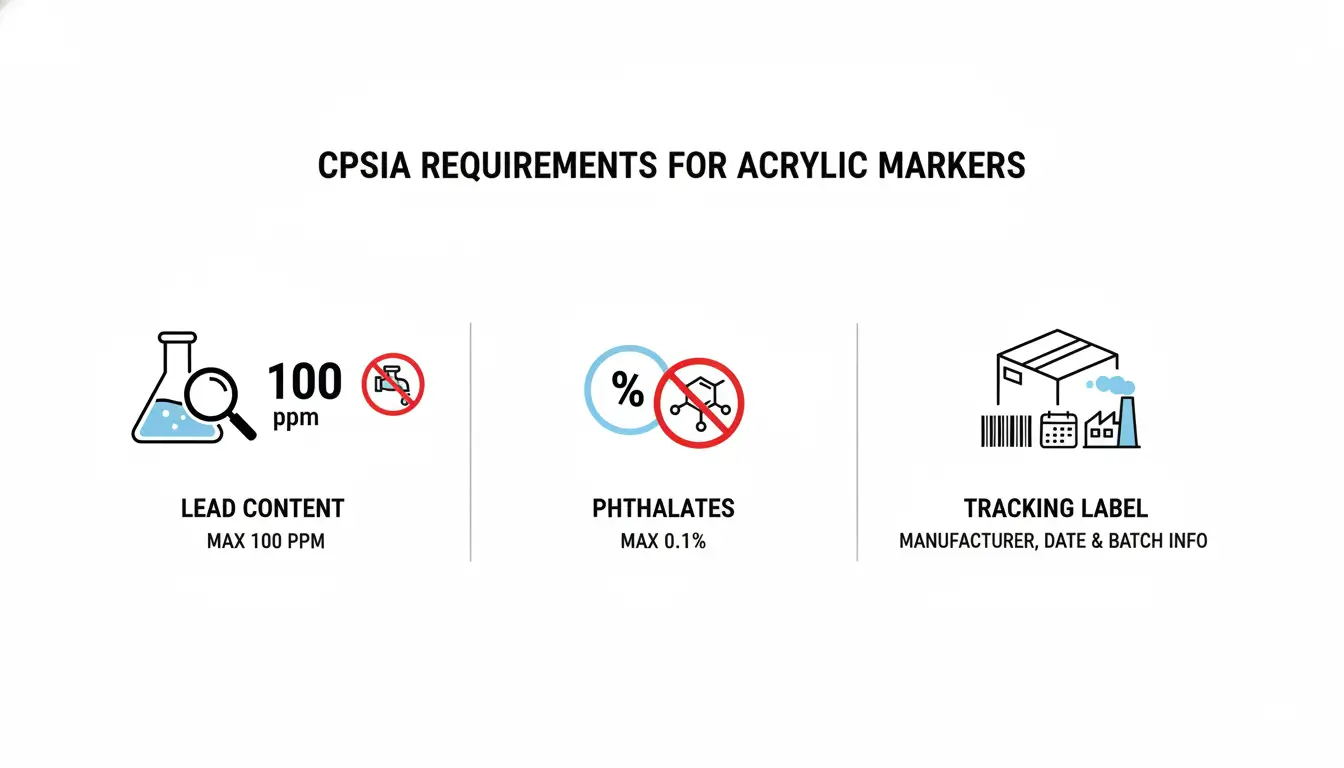
Key CPSIA Tests for Acrylic Markers
- Total Lead in Substrate (100 ppm limit):Applies to plastic barrels, caps, nibs, internal reservoirs.
- Phthalates (≤0.1%):Required for products intended or accessible to children.
- Tracking Label Requirements:Importers must ensure batch identification and manufacturer info.
Why CPSIA Matters for Acrylic Marker Compliance?
- Acrylic resin components and pigments may cause lead or phthalate issues.
- U.S. retailers and Amazon frequently request CPSIA documents during listing audits.
JareDrise Compliance Experience
- Provides CPSIA reports from SGS / Intertek / TUV
- Maintains archive reports dating back to 2017–2024 for traceability
ASTM D4236 Is Required for Acrylic Markers Classified as Art Materials in the U.S
ASTM D4236 applies because acrylic markers are considered art materials and must undergo toxicological review for chronic hazards and proper labeling.
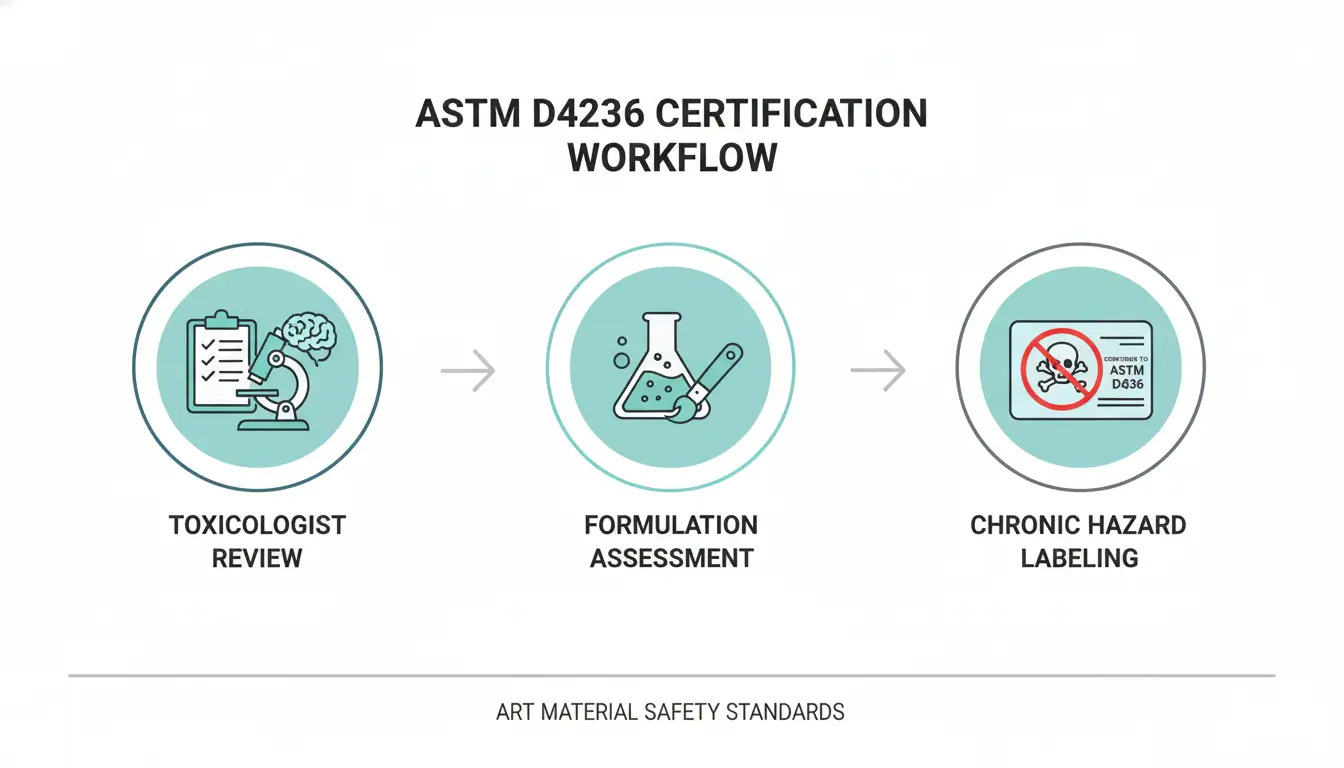
What ASTM D4236 Covers?
- Toxicologist evaluation of all formulation components.
- Chronic hazard labeling.
- Conforms to ASTM D4236 marking.
Why It Is Essential for Acrylic Markers?
- Acrylic ink contains pigments, resins, wetting agents, defoamers, and solvents.
- Most U.S. craft chains (Michaels, Hobby Lobby) require this certification.
JareDrise Operational Practice
- Updates toxicology reports yearly.
- Re-evaluates every newly developed color, as pigment changes may affect compliance.
EN71-3 Is the Primary Certification Required for Custom Acrylic Markers Sold in the EU
EN71-3 applies because acrylic markers can be used by children, requiring migration testing for 19 heavy metals.
EN71-3 Test Focus
- Migration of Aluminum, Arsenic, Barium, Cadmium, Lead, Mercury, Selenium, etc.
- Testing applies to barrels, tips, ink reservoirs, and coatings.
Why EN71-3 Connects Strongly to Acrylic Markers?
- Many pigments—especially yellows, oranges, metallics—contain natural trace metals.
- Resin additives sometimes increase migration levels.
JareDrise Practical Insights
- Yellow and metallic colors historically show the highest migration risk.
- Switched multiple pigments to REACH-approved alternatives between 2023–2025.
REACH Is Required for Acrylic Markers Distributed in the EU
REACH SVHC screening is required because acrylic ink contains multiple chemical additives, and all substances must comply with EU chemical regulations.
REACH Compliance Scope
- SVHC (233 substances) screening
- VOC content and solvent evaluation
- Acrylic resin classification and documentation
Why REACH Affects Acrylic Markers?
- Ink formulas contain binders, dispersants, humectants, and stabilizers.
- EU customs and online marketplace reviews often request REACH compliance.
JareDrise Execution
- Suppliers provide batch MSDS + REACH Declaration.
- Offers batch-specific SVHC results (<0.1%) when required.
Heavy Metal & Impurity Limits Are Common Additional Requirements
Heavy-metal and impurity limits apply because pigments and colored inks may contain trace elements restricted by U.S., EU, and Japan safety standards.
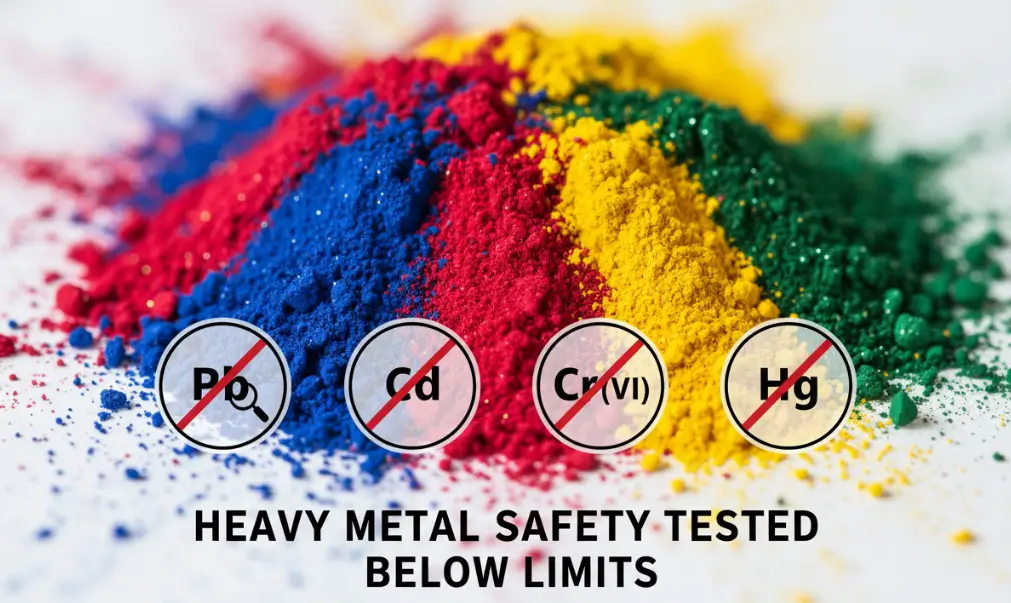
Commonly Tested Heavy Metals
- Lead (Pb)
- Cadmium (Cd)
- Chromium VI (Cr VI)
- Mercury (Hg)
- Nickel (Ni)
Why Ink Components Require Extra Evaluation?
- Mineral-based pigments have variable purity.
- Carbon-black pigments sometimes trigger PAHs testing.
JareDrise Experience
- Pre-tests high-risk colors in 48-color and 72-color sets.
- Maintains a color-risk mapping system for predictive quality control.
Additional Certifications Apply to the UK, Australia, and Other Markets
Custom acrylic markers exported to the UK and Australia usually require UKCA and AS/NZS compliance aligned with EN71 and ASTM standards.
UKCA Requirements
- Similar to EN71-3
- Requires Declaration of Conformity from importer or manufacturer
Australia Standards
- Typically follow EU EN71 + U.S. ASTM frameworks
- Large shipments often face spot checks
JareDrise Support
- Provides UKCA labeling guidance.
- Supplies chemical data aligned with Australian inspections.
Documentation Issues Are the Most Common Cause of Import and Marketplace Delays
The main compliance risks for acrylic markers are incomplete documents, mismatched batches, and missing labels—not the tests themselves.
Frequent Audit Failures
- Report batch numbers differ from actual shipment.
- Acrylic marker not clearly listed in reports.
- No tracking labels for children’s products.
- Pen-cap ventilation not meeting ASTM F963 requirements.
What Importers Should Verify?
- Report dates within 1–2 years.
- Conducted by SGS / ITS / TUV.
- Full color range is covered.
JareDrise File Preparation
- Maintains PDF + original lab datasets.
- Provides batch-level testing for specific SKUs.
How to Verify Whether a Chinese Supplier Is Truly Compliant?
Supplier compliance depends on materials, traceability, and export history—not just providing a single report.
Factory Qualification Indicators
- In-house ink mixing system.
- ISO9001 or similar management systems.
- 3+ years exporting to U.S. / EU.
Material & Component Indicators
- Pigment sources with traceability.
- Resin systems with MSDS.
- Nib suppliers with proven consistency.
JareDrise Characteristics
- 80% raw-material suppliers with 5+ years cooperation.
- Ink samples archived for 12 months per batch.
- Transparent color-formula traceability.
Certification Compliance Strongly Affects Cross-Border Platform Operations
Acrylic marker compliance directly determines whether listings can be uploaded, reviewed, and maintained on Amazon, Walmart, Etsy, and other platforms.
Marketplace Review Triggers
- Amazon: children’s product review, safety documents.
- Walmart: CPSIA batch records.
- Etsy: ingredient transparency for art materials.
Operational Risks
- Listing removal
- Goods returned to China
- Warehouse detention charges
- 300–800 USD per batch for re-testing
JareDrise Operational Assistance
- Provides full compliance file packages.
- Assists in verifying safety fields during listing creation.
- Offers color customization to reduce high-risk pigment usage.
Required Documentation Checklist for Importers
Acrylic marker shipments generally require six essential documents to support customs clearance and marketplace audits.
Mandatory Documents
- CPSIA
- ASTM D4236
- EN71-3
- REACH SVHC
- MSDS
- Traceability documents
Optional Documents
- ASTM F963 (if considered a toy)
- LFGB (if contact-testing is needed)
- EU packaging compliance documents
Why JareDrise Is Suitable for Long-Term Export of Custom Acrylic Markers?
JareDrise is suited for long-term export projects because the factory maintains full compliance systems, traceability, and batch testing based on U.S./EU standards.
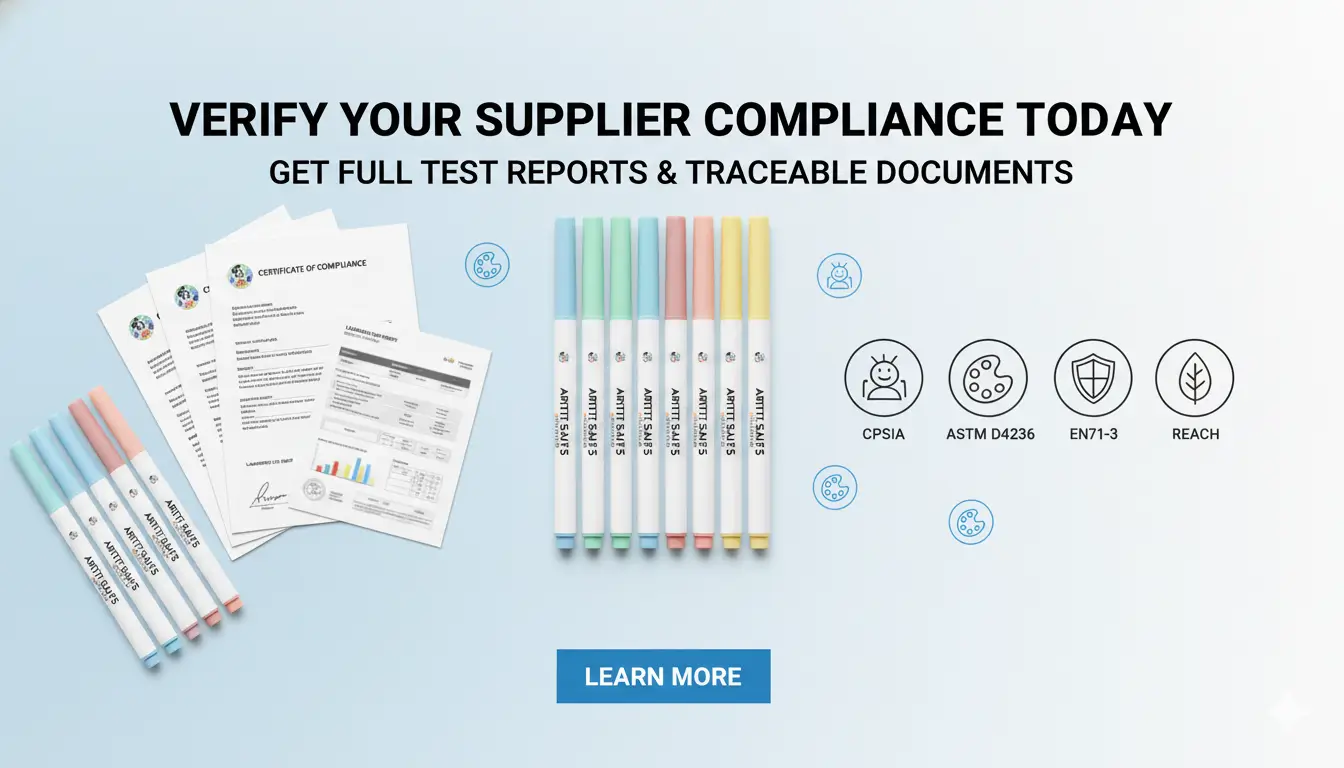
- 8+ years exporting to the U.S. and EU.
- Batch sampling archived for one year.
- Pre-testing for high-risk color groups.
- Long-term partnerships with SGS, Intertek, and TUV.
- Transparent formulation and component documentation.
Conclusion
Custom acrylic markers from China must comply with CPSIA, ASTM D4236, EN71-3, REACH, and heavy-metal restrictions to enter major markets.
These certifications ensure that ink formulas, pigments, plastic barrels, and markers used by children meet safety standards.
Importers can reduce audit and listing risks by checking the validity of reports, batch consistency, and the supplier’s export history.
JareDrise provides traceable materials data, batch records, and third-party testing files that importers can use to verify compliance before shipment.
Official Reference (U.S. CPSC):https://www.cpsc.gov/Regulations-Laws-Standards