
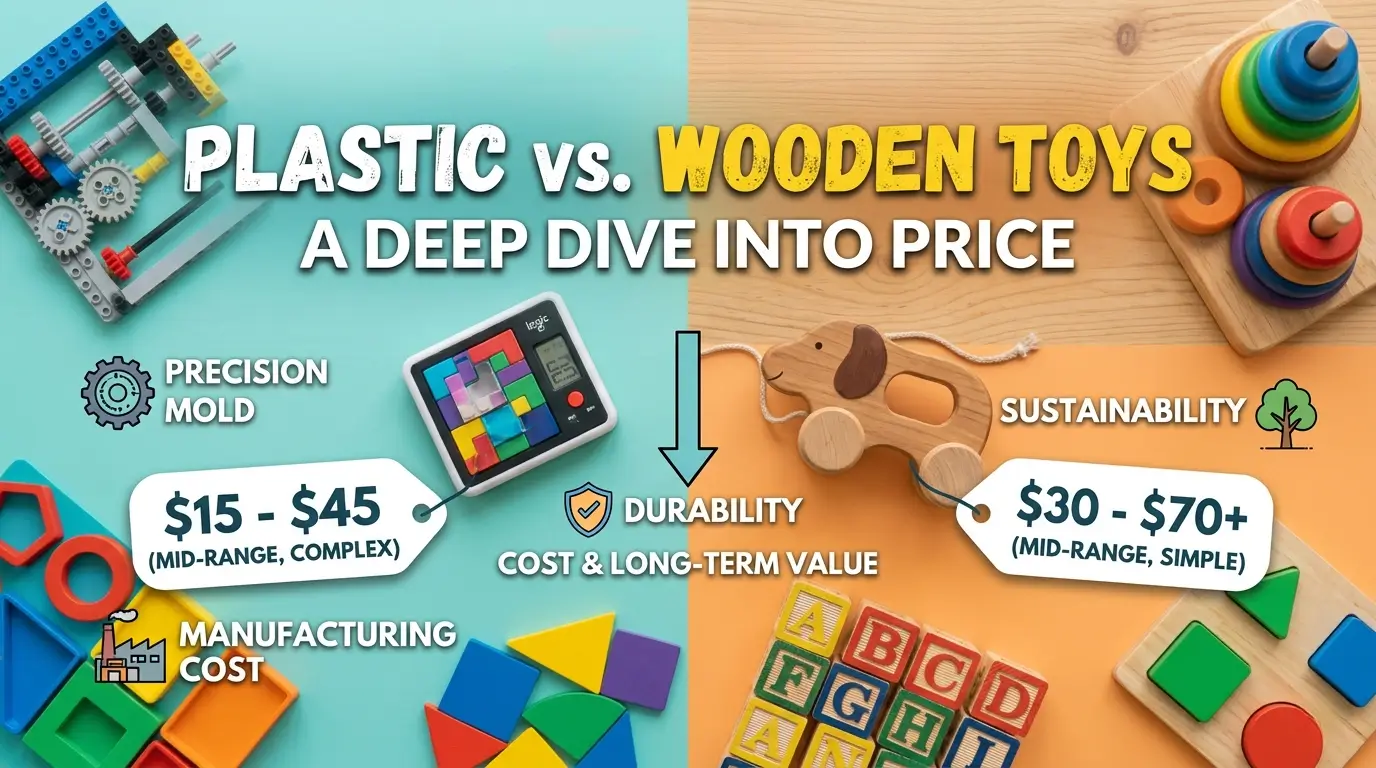
Buyers sourcing educational toys from China often find that unit price alone does not reflect the real landed cost or long-term profitability. For B2B buyers focused on procurement selection and profit margins understanding wholesale educational toys price and the differences between plastic vs wooden toys cost is critical to making informed decisions.
This comparison is not a simple matter of which is cheaper but a deep analysis of cost structure differences that directly impact bottom lines. China manufacturer have long held advantages in the global educational toy supply chain with mature production systems and competitive bulk order pricing that help buyers balance cost and quality.
Ignoring the underlying cost components can lead to unexpected expenses from production to shipping and ultimately erode profits. Whether you are a distributor Amazon seller or boutique brand clarifying these cost differences is the first step toward successful sourcing. Understanding the cost structure is essential before requesting quotations from suppliers.
What Really Determines Educational Toy Prices Core Cost Structure Breakdown
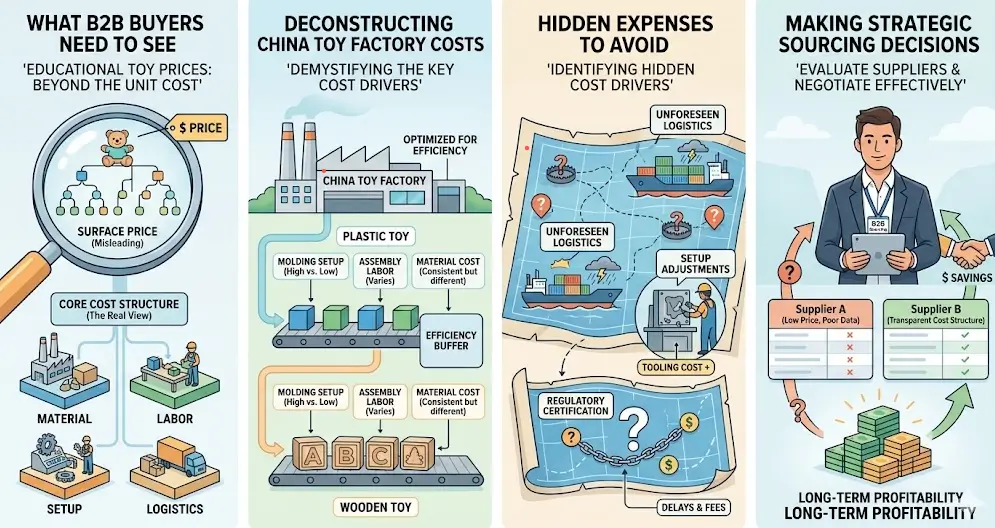
For B2B buyers navigating the complex world of educational toy sourcing understanding educational toy manufacturing cost is far more valuable than just comparing surface prices. Toy supplier pricing factors are multifaceted and go beyond raw materials encompassing production setup labor certification and logistics each playing a critical role in the final quotation.
China toy factory cost structure is particularly optimized for efficiency but varies significantly between plastic and wooden toy production. This breakdown demystifies the key cost drivers helping buyers identify hidden expenses and make strategic decisions that align with their business goals.
By focusing on the core components of cost rather than just unit price buyers can better evaluate suppliers negotiate effectively and avoid costly mistakes. Whether sourcing in bulk or customizing products a clear grasp of these factors ensures that every investment contributes to long-term profitability.
Material Cost Difference Plastic vs Wood Raw Material Impact
The cost logic behind plastic and wooden educational toys differs dramatically shaping their overall pricing and supply chain stability. Plastic toys rely on raw materials like ABS and PP whose prices are relatively stable but closely tied to global oil fluctuations directly affecting ABS toy cost.
In contrast wooden toy material price is highly variable depending on wood grade pine being the most economical beech offering better durability and birch standing as a premium option. Additionally FSC certification adds to the cost of wooden toys as it verifies sustainable sourcing a growing requirement in EU and US markets.
A key but often overlooked factor is that wood has a higher wastage rate than plastic with more waste generated during cutting shaping and finishing processes impacting eco toy manufacturing cost. In short plastic equals scalable cost structure with predictable raw material expenses while wood equals variable supply chain cost subject to market and environmental factors. Many buyers underestimate how material selection directly impacts MOQ pricing and margin structure.
Mold & Production Setup Cost Hidden Factor Most Buyers Ignore
While most buyers compare unit prices mold cost is often the most underestimated factor in plastic toy sourcing. Plastic educational toys require injection molding which involves high upfront costs ranging from 1000 to 50000 or more depending on complexity size and precision.
This makes injection molding toy cost China a critical consideration for buyers especially those with custom designs. Toy mold cost supplier can vary widely so negotiating favorable terms and understanding mold amortization is essential. In contrast wooden toys require no mold but incur high labor shaping cost as they rely on manual processes like carving sanding and assembly driving up wooden toy production process cost.
The core contrast is clear plastic is CAPEX-heavy requiring significant initial investment in molds while wood is OPEX-heavy with ongoing labor expenses shaping each unit. For buyers with long-term production plans mold costs can be amortized over large orders but for small batches or short-term projects they can become a prohibitive expense. MOQ and mold amortization significantly affect final quotation.
Labor Cost vs Automation Level
The gap in labor cost and automation level between plastic and wooden toys highlights a key advantage of China’s supply chain. Plastic toys benefit from automated production lines which reduce toy manufacturing labor cost China and ensure consistent quality with minimal human error.
These lines handle molding assembly and even packaging streamlining production and lowering per-unit costs. Wooden toys on the other hand are craftsmanship dependent relying on manual sanding painting and assembly which require skilled labor and increase production time.
While Vietnam and India offer slightly lower labor costs China’s combination of automated plastic production and skilled woodworkers balances efficiency and quality. The contrast is stark plastic equals high efficiency low variability with predictable labor expenses while wood equals craftsmanship dependent production with higher labor costs and potential delays.
Labor intensity directly affects lead time and pricing stability making it a critical factor for buyers managing inventory and market demand.
Plastic vs Wooden Toys Price Comparison Wholesale Level
At the wholesale level plastic vs wooden toys cost comparison requires a focus on how pricing scales with order volume and other commercial factors. Wholesale educational toys price is not static and understanding the dynamics of bulk order pricing is key to maximizing value.
For B2B buyers whether Amazon sellers distributors or brand owners this section breaks down the real-world pricing differences that impact procurement decisions. It goes beyond surface unit prices to explore how MOQ customization shipping and packaging influence the final cost ensuring buyers can compare options apples to apples.
By examining these factors buyers can identify which type of toy aligns with their order size budget and market positioning. This analysis also highlights the advantages of working with China manufacturer who offer flexible pricing based on order volume and customization needs.
Unit Price Comparison Low MOQ vs Bulk Order
Unit prices for both plastic and wooden educational toys follow distinct change curves based on order volume a key consideration for wholesale plastic toys price China and wooden toys bulk price supplier. Plastic toys typically have a steeper price reduction curve as MOQ increases because the high upfront mold cost is amortized over more units.
For example small orders with low MOQ may see plastic toy prices range from 2 to 8 per unit while bulk orders can bring that down to 0.8 to 3 per unit depending on customization. Wooden toys by contrast have a more gradual price reduction with bulk orders offering limited savings because their cost is driven by labor and raw materials which do not scale as easily.
Educational toys MOQ pricing also varies custom designs add complexity and increase prices for both types but plastic toys are more resilient to customization costs due to automated production. Most suppliers in China adjust pricing significantly based on order volume and mold reuse making it essential for buyers to align their order size with their cost goals.
Shipping Cost Impact on Final Price
Shipping cost is a hidden factor that often distorts initial price comparisons making toy shipping cost China a critical component of landed cost. Plastic toys are lightweight and compact resulting in lower freight costs whether shipped by sea air or courier.
Wooden toys by contrast are heavier and have higher volumetric weight even when packaged efficiently leading to higher shipping expenses per unit. This difference becomes more pronounced for Amazon sellers as FBA toy shipping weight cost directly affects their fulfillment fees.
A key point for buyers is that landed cost is greater than factory price and shipping can account for 10 to 30 of the total cost depending on the toy type and destination.
For example two similar sized educational toys one plastic and one wooden may have nearly identical factory prices but the wooden toy’s higher shipping cost can make its landed cost 20 to 40 higher. Two products with similar factory price may have completely different landed costs making shipping a make-or-break factor for profitability.
Packaging & Branding Cost Difference
Packaging and branding costs are critical B2B details that impact both cost and market positioning. Wooden toys are often paired with eco packaging such as kraft boxes to align with their premium eco friendly image driving up toy packaging cost OEM China but resonating with environmentally conscious consumers.
Plastic toys typically use blister packaging or printed boxes which are more cost effective but can be customized for branding at an additional expense. Custom toy branding cost varies based on design complexity printing quality and packaging type with wooden toy packaging often requiring more premium materials to maintain its positioning.
Branding also affects retail positioning higher end branding for wooden toys can justify higher wholesale prices while plastic toys often rely on mass market branding to drive volume. Packaging often determines retail shelf competitiveness more than product cost itself making it a key consideration for buyers looking to stand out in crowded markets.
Safety Certification & Compliance Cost EUUS Market Focus
For B2B buyers targeting EU and US markets safety certification and compliance costs are non negotiable and directly impact profitability. These costs are a critical part of educational toy manufacturing cost and failure to comply can result in costly shipment rejections or market bans.
China toy factory cost structure includes compliance measures but buyers must understand how these costs vary between plastic and wooden toys. This section breaks down the specific certification requirements for each type of toy helping buyers budget effectively and avoid compliance risks.
By prioritizing compliance buyers can build trust with retailers and consumers while protecting their brand reputation. Whether sourcing plastic or wooden toys a clear understanding of certification costs is essential for successful market entry.
Plastic Toys Certification Cost EN71 ASTM CPSIA
Plastic educational toys require rigorous certification to meet EU and US safety standards with EN71 toy certification cost and ASTM toy compliance China being key expenses for B2B buyers. These certifications include chemical testing to ensure compliance with phthalates and BPA restrictions which are strictly regulated in both markets. Chemical testing cost varies based on the number of samples and tests required but typically ranges from 200 to 800 per product.
Additionally batch testing is required for plastic toys adding ongoing costs as each production batch must be verified for compliance. This batch testing cost impact is often underestimated by buyers but can add 5 to 10 to the total production cost.
Non compliance can result in shipment rejection or Amazon listing removal which is a significant risk for buyers relying on timely delivery to meet market demand. Investing in proper certification upfront is far more cost effective than addressing compliance issues after production.
Wooden Toys Compliance Requirements
Wooden educational toys have distinct compliance requirements that influence their cost and market positioning. FSC certification is optional but premium adding to the cost but making products more attractive to eco conscious buyers and retailers looking for FSC wooden toys supplier China. This certification verifies sustainable wood sourcing and can increase material costs by 10 to 15. Paint safety is another critical requirement with lead free and non toxic paints mandatory in EU and US markets adding to production costs. Additionally wooden toys must meet strict sanding and splinter safety standards to avoid injury which requires extra labor and quality control measures. These compliance steps ensure safe wooden toys certification and align with consumer expectations for premium eco friendly products. Wooden toys are often positioned as premium eco friendly alternatives in EU markets making compliance not just a legal requirement but a marketing advantage.
Market Demand & Pricing Strategy Differences
Market demand and pricing strategy are closely linked and understanding these differences helps B2B buyers align their sourcing decisions with market needs. Plastic and wooden educational toys cater to different market segments each with distinct pricing strategies and profit potential.
Amazon educational toys sourcing and Montessori toys wholesale China are key areas where these differences are most apparent. For buyers choosing between the two understanding how market demand drives pricing and positioning is essential for maximizing sales and profitability.
This section explores the preferences of different retail channels and how they influence pricing strategy helping buyers make choices that align with their target market and business goals.
Amazon Sellers Prefer Plastic or Wooden
Amazon sellers face unique considerations when choosing between plastic and wooden educational toys. Plastic toys are typically fast turnover SKU with lower price points higher volume and consistent demand making them ideal for sellers focused on scaling sales and maintaining high inventory turnover.
They align well with Amazon’s mass market audience and benefit from lower shipping and fulfillment costs. Wooden toys by contrast are niche Montessori premium products targeting parents and educators seeking eco friendly durable and developmentally focused options.
Montessori toys wholesale China offers sellers access to high quality wooden toys that command higher price points and margins. While wooden toys have lower sales volume their premium positioning leads to higher per unit profits. Amazon sellers often balance both types in their inventory but the choice ultimately depends on their target audience and business model.
Retail Positioning Affects Price Strategy
Retail positioning is a key driver of pricing strategy for both plastic and wooden educational toys. Plastic toys are positioned for the mass market with lower price points higher volume and a focus on accessibility. This positioning requires a cost based pricing strategy where margins are lower but volume drives overall profit.
Wooden toys by contrast are positioned as premium products with higher price points and a focus on quality sustainability and craftsmanship. This premium positioning allows for a margin based pricing strategy where higher per unit margins offset lower sales volume.
The margin structure difference between the two is significant with plastic toys typically offering 20 to 30 margins and wooden toys offering 40 to 60 margins. Pricing is not just cost based but positioning based and buyers must align their sourcing choices with their retail positioning to maximize profitability.
Which One Is More Profitable for Importers
Determining which type of educational toy is more profitable for importers depends on their business model market focus and risk tolerance. Profitability is not just about unit price but about balancing volume margins and market demand.
This section compares the profit potential of plastic and wooden toys helping importers make informed decisions that align with their goals. Whether focusing on high volume sales or premium margins understanding the profit dynamics of each type is essential. By examining profit margins and suitability for different business models importers can choose the right product type to maximize returns on their investment.
Profit Margin Comparison
Profit margins for plastic and wooden educational toys follow distinct models based on volume and pricing. Plastic toys rely on volume driven profit with lower per unit margins but higher sales volume. Importers sourcing plastic toys can achieve consistent profits by leveraging bulk order pricing and scaling sales through mass market channels. Wooden toys by contrast rely on margin driven profit with higher per unit margins but lower sales volume.
Their premium positioning allows importers to command higher wholesale and retail prices offsetting lower volume. For example a plastic toy with a 2 unit cost sold at 3 wholesale offers a 1 margin while a wooden toy with a 5 unit cost sold at 10 wholesale offers a 5 margin.
The choice between the two depends on an importer’s ability to move volume versus their willingness to focus on niche premium markets.
Best Choice for Different Business Models
Different business models require completely different sourcing strategies and the choice between plastic and wooden educational toys varies accordingly. Amazon sellers benefit most from plastic toys due to their fast turnover high volume and lower FBA costs aligning with the platform’s mass market focus.
Distributors who supply retailers and schools often prefer a mix but lean toward plastic toys for their consistent demand and lower price points which appeal to budget conscious buyers. Boutique brands on the other hand thrive with wooden toys as their premium eco friendly positioning aligns with the brand’s values and allows for higher margins.
Importers must evaluate their business model target market and resources to choose the right product type. Those focused on scalability and volume will find plastic toys more profitable while those focused on premium positioning and brand identity will benefit from wooden toys. Different business models require completely different sourcing strategies.
How to Choose the Right Educational Toy Manufacturer in China
Choosing the right educational toy manufacturer in China is the most critical step for B2B buyers looking to balance cost quality and compliance. China’s supply chain offers a wide range of options but not all manufacturers are equipped to meet the specific needs of B2B buyers. This section provides a practical guide to evaluating suppliers avoiding common pitfalls and requesting accurate quotations. By following these steps buyers can build long term relationships with reliable manufacturers that support their business goals. Whether sourcing plastic or wooden toys understanding how to select the right supplier ensures consistent quality on time delivery and competitive pricing.
What Buyers Should Ask Suppliers
When evaluating China manufacturer buyers must ask specific procurement questions to ensure alignment and avoid hidden costs. These questions include inquiries about MOQ as it directly impacts pricing and order feasibility. Buyers should also ask for a mold cost breakdown to understand upfront expenses and amortization terms especially for plastic toys.
Certification included is another critical question to verify that the manufacturer covers EN71 ASTM or CPSIA costs and can provide necessary documentation. Sample cost is important for testing quality before placing bulk orders and lead time helps buyers plan inventory and meet market demand.
Asking these questions upfront ensures that buyers have a clear understanding of the supplier’s capabilities costs and timeline reducing the risk of misunderstandings or costly delays.
Red Flags When Comparing Toy Prices
When comparing wholesale educational toys price buyers must be vigilant for red flags that indicate hidden risks or poor quality. Too low price is a major red flag as it often signals hidden quality risks such as substandard materials non compliant production or cutting corners on labor and safety.
No certification transparency is another warning sign as manufacturers who cannot provide clear documentation of compliance are likely to face shipment rejections or legal issues. Unclear material origin is also a concern especially for wooden toys as it may indicate unsustainable or low quality wood that could fail safety tests.
Buyers should also be wary of manufacturers who avoid discussing mold costs labor practices or lead times as these omissions often hide additional expenses. By recognizing these red flags buyers can avoid costly mistakes and select reliable suppliers.
Requesting Accurate Quotation Conversion Hook
Requesting an accurate quotation is the final step in the sourcing process and a critical opportunity to ensure alignment with suppliers. A real quotation should include material specification mold amortization packaging certification and shipping assumptions.
This level of detail ensures that buyers have a complete understanding of the total cost not just the unit price. Buyers should provide clear details about their requirements including MOQ customization needs target market and certification requirements to receive an accurate quote.
Negotiating based on the full cost breakdown rather than just unit price allows buyers to secure the best value and avoid unexpected expenses. By requesting detailed quotations buyers can compare suppliers apples to apples and make informed decisions that support their profitability goals.
Conclusion Plastic vs Wooden Toys Price Which Is Truly More Cost Effective
When evaluating plastic vs wooden toys cost for B2B sourcing the key takeaway is that price does not equal cost and cost does not equal profitability. The most cost effective choice depends on a buyer’s specific business model target market and long-term goals.
Landed cost plus positioning equals the right decision with plastic toys offering volume driven profits and wooden toys providing margin driven returns. China manufacturer remain a top choice for both types offering competitive bulk order pricing and optimized production processes.
Buyers who focus on cost structure rather than just unit price and align their choice with market demand will achieve the highest profitability. Requesting a detailed quotation based on your target market is the next step for accurate decision-making.