
OEM educational toys factories are often unfriendly to startups: most are built for mass production, prefer big retailers, and set high minimum order quantities (MOQs) to protect their margins and keep production lines efficient.
For a new educational toy brand, Amazon seller, or product developer, that usually means quotes of hundreds or even thousands of units per SKU, long lead times, and little flexibility on design changes.
At the same time, demand for niche, well‑designed learning products is booming, and more small brands want to test ideas quickly with small batches before committing serious capital. This gap between traditional factory thinking and the needs of lean, experiment‑driven brands is exactly why low‑MOQ OEM educational toy factories have become so important.
This guide is written to help you solve three core problems: whether a factory will actually accept small‑batch production, what MOQ you should realistically expect for different educational toys, and how to identify and evaluate a reliable partner.
We will walk through how small‑order OEM manufacturing works in practice, from concept, prototyping, and sampling to bulk production and shipping. You will also learn which safety certifications to plan for in key markets and the main cost drivers that shape your unit price when volumes are still low.
As an educational toy manufacturer working with startups and Amazon sellers, we have helped many small brands launch products with low minimum order quantities and grow them into stable, repeat orders over time.
This experience shows which projects are suitable for small‑batch OEM, how to design toys and packaging to keep MOQs and tooling costs manageable, and what communication process prevents delays, quality issues, and surprises during safety testing.
What Is an OEM Educational Toy Factory?
An OEM educational toy factory manufactures toys based on a client’s design, specifications, and branding requirements. In this model, the client owns the concept and intellectual property, and the factory acts as a technical and production partner that brings the idea into mass production.
The client usually provides the product design, learning objectives, target age group, artwork, and brand assets, while the factory focuses on turning these into safe, manufacturable toys at scale.
In practice, OEM means you as the brand provide the core inputs: product design, concept, brand name, logo, and sometimes packaging layout.
The factory then handles engineering (such as material selection, structural optimization, and safety considerations), manufacturing (tooling, molding, printing, assembly, and quality checks), and packaging (box production, inserts, labels, and barcodes).
For educational toys, this often includes advising on age‑grading, small‑parts rules, and how to adapt your design to pass safety tests in markets like the US and EU.
A key reality in the toy industry is that many startup brands and Amazon sellers are not fully clear on the difference between OEM, ODM, and private label. They may use custom toy,white label, and OEM interchangeably, which leads to mismatched expectations when they start talking to factories.
For example, a brand might think they are doing OEM when they actually want to put their logo on an existing product, or they request heavy product changes from an ODM catalog item without realizing it turns into an OEM‑level project.
Understanding these terms upfront helps you choose the right cooperation model, set realistic MOQs and costs, and communicate your needs clearly with potential manufacturing partners.
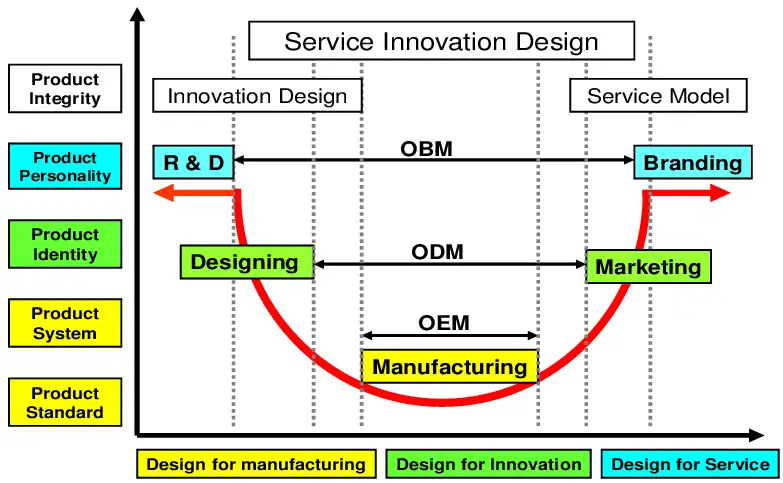
OEM vs ODM in Educational Toys
In OEM manufacturing, the buyer provides the product design while the factory produces the toy according to the provided specifications.
You control the learning content, functionality, materials, and overall look, and the manufacturer’s job is to validate feasibility, develop tooling, create samples, and then run production to meet your quality standards.
This gives you stronger product differentiation, but normally requires more development time, higher upfront cost, and clearer documentation from your side.
ODM means the factory already has an existing toy design that buyers can customize with branding or packaging.
Instead of starting from a blank page, you choose from the factory’s catalog of proven educational toys, then adjust colors, printing, packaging, and sometimes minor features to match your brand.
This approach shortens development cycles, lowers risk, and often comes with lower MOQs because the factory already produces the core product for multiple customers.
OEM is usually better for established brands and companies that have access to product designers, curriculum experts, or R&D teams and want a unique, defensible product.
ODM tends to be more suitable for startups, Amazon sellers, and small brands that need to test the market quickly, minimize upfront investment, and rely on the factory’s existing designs while still building a recognizable brand presence.

Example OEM Toy Products
Educational toy factories commonly produce products such as Montessori learning toys, STEM science kits, sensory toys for toddlers, educational puzzles, and wooden math learning toys.
They may also make language learning sets, magnetic building blocks, electronic learning kits, and classroom teaching aids tailored to specific curricula.
Each of these categories can be deeply customized in function, difficulty level, material, and visual style to match different educational philosophies and markets.
These products are especially suitable for OEM because design differences significantly change the learning experience and brand positioning.
A Montessori toy can emphasize practical life skills or math concepts; a STEM kit can focus on robotics, chemistry, or physics; a sensory toy can target specific developmental needs.
This high potential for design variation and brand storytelling makes OEM manufacturing a powerful way for educational toy brands to differentiate themselves, build loyal audiences, and justify higher price points even when competing on crowded platforms like Amazon.
Why Small Order OEM Is Important for New Toy Brands?
For many startups and small toy brands, the biggest challenge is the high minimum order quantity required by traditional factories. Traditional toy manufacturers are optimized for mass production and often set MOQs at 3,000, 5,000, or even 10,000 pieces per SKU to keep their lines efficient and cover setup costs.
For a new educational toy, committing to these quantities means tying up a huge amount of capital in inventory that may or may not sell. On top of that, you still need to pay for product development, safety testing, packaging design, logistics, and marketing, which stretches cash flow even further.
From a founder’s perspective, large MOQs create three major risks. First is inventory pressure: if your product does not sell as expected, you end up with boxes sitting in a warehouse, paying storage fees, discounts, or even write‑offs.
Second is cash flow pressure: funds that could be used for advertising, content creation, or a second product are locked into unsold stock.
Third is product validation risk: until your toy is actually in front of real customers, you do not know if the price point, features, or age positioning are right, so a big first order is essentially a bet you cannot easily reverse.
This is especially true for niche educational toys, where market demand can be highly specific to certain age groups, teaching methods, or regions.
Small order OEM manufacturing directly addresses these problems by allowing new brands to start with lower quantities while still owning their design and brand.
Instead of being forced into thousands of units, you might begin with a few hundred or a split order across multiple SKUs, giving you actual data from real buyers before scaling up.
It turns product development into an iterative process: launch a small batch, collect reviews and feedback, fine‑tune the design or packaging, then confidently increase your order size.
For startups, Amazon sellers, and independent educational designers, this flexibility can be the difference between cautiously growing a sustainable brand and being stuck with one risky, oversized order.
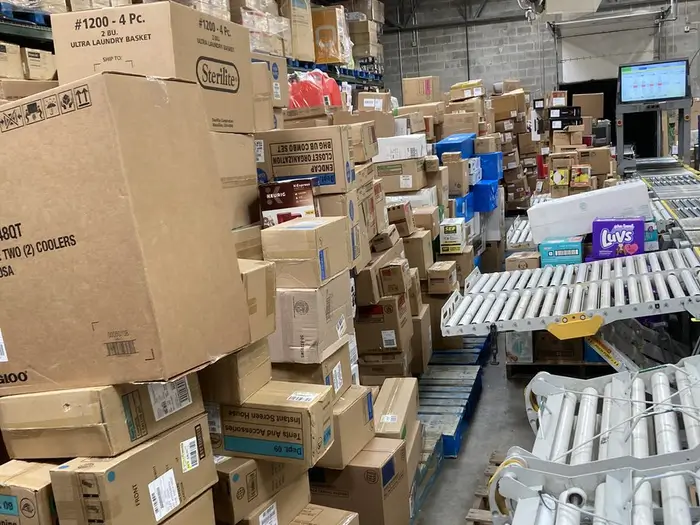
Problem: Traditional Toy Factories Have High MOQ
Traditional toy factories set high MOQs because their cost structure is built around large production runs. Tooling and mold fabrication can be expensive, especially for plastic and electronic toys, and factories need to amortize this cost over thousands of units.
Every production run also requires machine setup, line calibration, and quality control procedures, all of which take time and labor regardless of whether you make 300 pieces or 30,000 pieces.
In addition, factories usually purchase raw materials and components in bulk to secure better prices and stable supply, which further encourages larger batch sizes.
Processes like injection molding are particularly volume‑sensitive, because they become truly cost‑effective only when the machine runs continuously with the same mold and material for long periods.
As a result, many manufacturers raise their MOQs not to be difficult, but to ensure that each order is profitable and does not disrupt their production schedule.
Benefit of Small Order Manufacturing
1.Test market demand
Small batch manufacturing allows brands to test whether a toy is popular before investing in large‑scale production.
You can launch on Amazon, your own website, or through small retail partners and use real sales data and reviews to decide your next move.
2.Reduce financial risk
By ordering fewer units upfront, you limit how much capital is tied up in a single product.
If the toy does not perform as expected, the financial damage is manageable, and you can pivot to a new design without carrying a massive stock burden.

3.Faster product launch
Smaller runs are often easier to schedule and can move through production more quickly than very large orders.
This speed helps you ride seasonal trends, react to competitor products, and shorten the time between prototype and real customer feedback.
4.Improve inventory control
With small orders, you can restock based on actual sales velocity rather than forecasts alone.
This improves cash flow, reduces warehousing costs, and lowers the risk of both overstocking and stockouts during key sales periods.
5.Case Example
A startup Montessori toy brand decided to launch its first product on Amazon with an initial OEM order of just 300 units.
This small batch allowed the founders to test their price point, listing images, and keyword strategy without committing to a huge inventory position.
After they collected positive reviews, confirmed strong conversion rates, and identified minor packaging improvements, they confidently placed larger follow‑up orders.
Within one year, the brand scaled total production of that same toy to 10,000 units across multiple batches, using profits from early sales to fund growth instead of taking on heavy upfront risk.
Minimum Order Quantity (MOQ) in Educational Toy Manufacturing
MOQ (Minimum Order Quantity) is the smallest number of units a manufacturer is willing to produce in a single order. For educational toy brands, this number directly affects how much capital you need, how much inventory you must hold, and how quickly you can test new product ideas.
MOQ is not arbitrary; it reflects the factory’s real cost structure and how efficiently they can run their production lines.
In educational toy manufacturing, MOQ usually depends on four main factors: materials, mold requirements, product complexity, and production line setup.
Wooden toys may require different cutting tools, sanding, painting, and packaging processes than plastic toys, which often need expensive injection molds and color matching.
Electronic STEM toys add PCBs, components, firmware, and extra testing steps, all of which increase both setup time and minimum buy quantities from component suppliers.
The more steps and specialized equipment involved, the higher the MOQ tends to be.
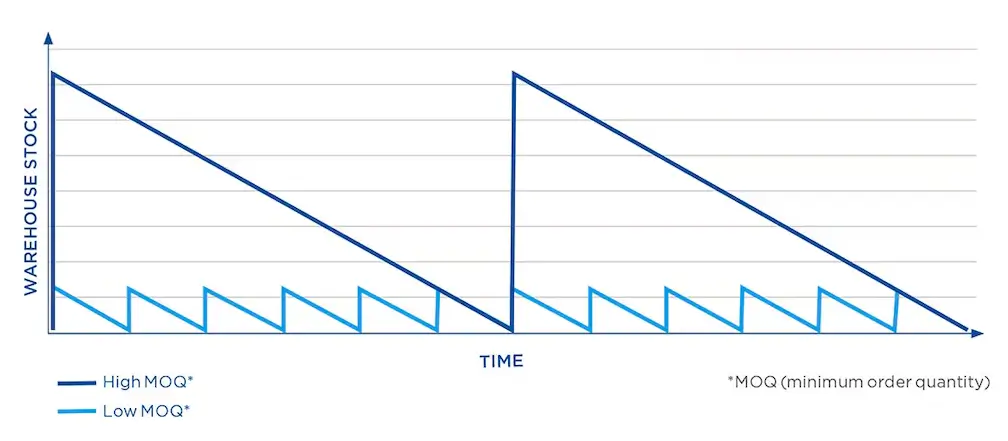
Another key driver is how the factory organizes its production schedule. Each time they switch from one product to another, they must stop machines, adjust settings, change molds, recalibrate printing equipment, and re‑train workers on specific quality checkpoints.
These setup activities cost time and labor whether you order 300 units or 30,000 units, so factories prefer larger batches to spread that fixed cost across more pieces.
For new educational toy brands, understanding this logic helps you negotiate more effectively and design products that are feasible at lower MOQs.
For startups and Amazon sellers, MOQ is often the line between being able to launch a product and having to abandon the idea.
A high MOQ can lock up cash in inventory, limit your ability to test multiple SKUs, and increase the risk that you are stuck with stock that does not sell.
A more flexible, small‑order‑friendly MOQ structure allows you to launch in stages, refine your design and branding, and scale only when you see real demand.
That is why choosing the right manufacturing partner—and setting expectations about MOQ from the first discussion—is critical for educational toy projects.
What Is MOQ for Jaredrise?
At Jaredrise, the MOQ for educational toys is intentionally structured to be friendly to startups and small brands.
We focus on offering low‑MOQ OEM manufacturing so that new products can enter the market with smaller initial commitments while still meeting professional quality and safety standards.
Depending on the toy type and customization level, we typically start with pilot runs in the low hundreds and then scale as your sales grow.
Typical MOQ for Educational Toys
Different categories of educational toys come with different typical MOQs, mainly because of tooling costs and production processes.
For wooden toys, a common MOQ range is around 500–2,000 units per design, since woodworking setups and surface treatments are relatively flexible once the cutting and finishing process is defined.
This makes wooden Montessori and learning toys a popular choice for brands that want custom designs with comparatively lower starting quantities.
Plastic educational toys often require higher MOQs in the range of 2,000–5,000 units per SKU.
The reason is that plastic toys usually rely on injection molding, which needs custom steel or aluminum molds that can be expensive to produce.
To make this investment viable, factories encourage larger batches so the mold cost and machine setup time can be spread over more units, bringing the per‑unit cost down.
For electronic STEM toys, typical MOQs might fall between 1,000–3,000 units, because you must consider not just plastic housings but also PCBs, electronic components, assembly lines, and functional testing.
Component suppliers for electronics also have their own MOQs, which flow through to the final toy MOQ.
Understanding these ranges helps you prioritize which type of educational toy to launch first. If your budget is limited and you want to validate a concept with a smaller batch, wooden toys or simpler constructions are often more realistic than highly complex plastic or electronic items.
Once your brand gains traction, you can move into higher‑MOQ products with more advanced features.
How Some Factories Accept Small Orders?
Some factories have developed specific methods to accept smaller orders without losing efficiency. One common approach is shared production, where they combine multiple small orders in the same production run. For example, they may run several similar wooden toys or plastic parts together, using shared materials and tooling to reduce the setup cost per client.
A second method is using modular components, where different toys share standard parts such as blocks, connectors, or electronic modules. By designing products around a common component library, factories can order materials and parts in larger quantities while still assembling them into multiple distinct OEM products for different brands. This reduces individual MOQs and makes it easier to add new SKUs without starting from zero each time.
A third approach is leveraging digital manufacturing and flexible equipment. Technologies like CNC machining, laser cutting, and digital printing allow for economical smaller batches because they require less dedicated tooling and can switch between designs more quickly.
While these methods may have a higher per‑unit cost than full mass production, they significantly lower the initial MOQ and are well suited for pilot runs, market testing, and niche educational products.

Start Your Small Batch Educational Toy Production Today
Launching a new educational toy no longer has to mean gambling on huge orders, overstretched cash flow, or untested products sitting in a warehouse.
By combining small‑batch OEM manufacturing with thoughtful product design, you can validate demand, refine your learning outcomes, and build a recognizable brand step by step.
Whether you are developing Montessori materials, STEM kits, or sensory toys, starting with a flexible, low‑risk manufacturing approach gives you room to experiment and grow sustainably.
With a partner that offers low MOQ and true OEM capability, you can bring your own concepts, artwork, and branding to life without needing to order thousands of units from day one.
At the same time, having access to global export experience—covering safety standards, labeling rules, and shipping to markets like North America and Europe—helps ensure your toys are not only beautiful and educational, but also compliant and ready for international customers.
This combination of small order flexibility and professional manufacturing support is exactly what modern toy startups and Amazon sellers need.
If you are ready to take the next step, now is the time to move from idea to real product. Get in touch to discuss your project, request a sample or pilot run, and review realistic MOQ options for your specific toy category.
Share your design or concept, and we can help you evaluate feasibility, recommend materials and processes, and create a production plan that matches your budget and growth goals. Your small batch today can be the foundation of a successful educational toy brand tomorrow.