
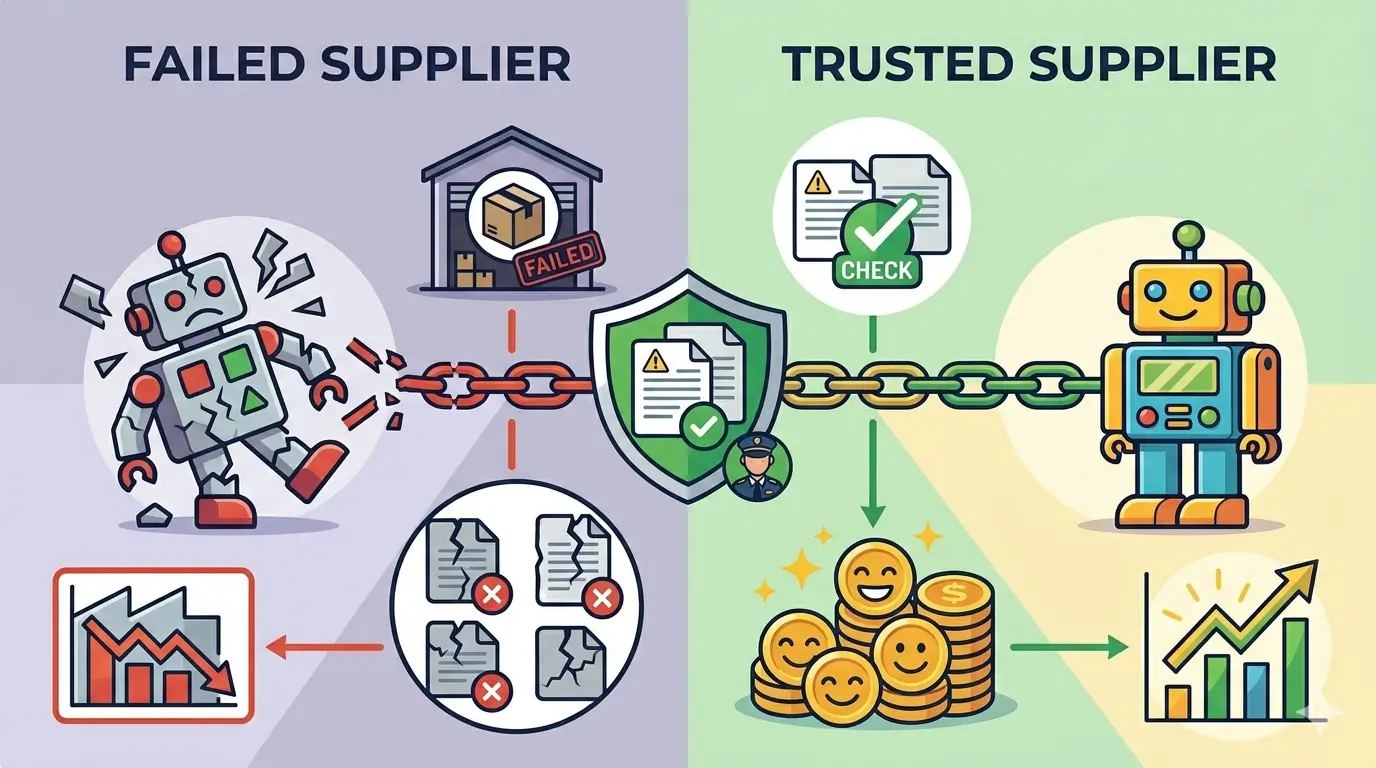
Many buyers assume all educational toy suppliers in China are similar — until they face quality issues, certification problems, or unexpected costs. This misconception often leads to hasty decisions that end up costing time, money, and brand reputation. These problems typically arise from unregulated price differences (some suppliers quote artificially low prices to win orders only to cut corners later), inconsistent certification standards that vary widely between manufacturers, and unpredictable delivery times that can derail your business plans, especially during peak retail seasons like Christmas or back-to-school.
In this guide, we break down how to evaluate a reliable supplier, avoid hidden costs that eat into profits, and choose products that actually sell in your target market. As a professional China-based manufacturer focusing on educational toys for 3–4 year olds, we understand the critical role of safety, price control, and profit margins in your sourcing journey.
We’ve helped hundreds of buyers navigate the complexities of sourcing from China, and we’re sharing our industry insights to help you make informed decisions that drive long-term success.
Why Choosing the Right Educational Toys Supplier Matters More Than the Product Itself ?
Choosing the right educational toys supplier matters more than the product itself because execution determines success or failure. A strong product idea can still fail if the supplier delivers unstable quality, unsafe materials, or fails certification requirements like CPC or EN71. These issues directly affect market access, customs clearance, and brand trust.
A reliable supplier ensures consistent quality, compliant documentation, and stable mass production. They also help reduce hidden risks such as rework costs, delays, and compliance failures that erode profit margins.
In real sourcing practice, successful buyers focus less on product samples and more on supplier capability, quality control systems, and certification accuracy. Ultimately, the supplier decides whether a product can be legally sold, reliably shipped, and profitably scaled in global markets.
Quality Risks That Can Destroy Your Toy Business
In the preschool toy business, the supplier you choose often matters more than the product itself. While a great product idea can attract customers, an unreliable supplier can turn that idea into a disaster. Quality issues are one of the most common pitfalls — even for the same product, different suppliers can deliver vastly different results.
For example, some suppliers use low-grade, non-toxic paint that fades or peels easily after a few uses, leaving parents concerned about their child’s safety and your brand’s credibility. Others cut corners on material thickness, leading to loose small parts that pose choking hazards for 3–4 year olds — a critical safety risk that can result in product recalls and legal liability.
These issues not only damage your brand reputation but also lead to costly returns, negative customer reviews, and lost sales. In contrast, a reliable supplier uses high-quality, child-safe materials, implements strict quality control checks at every production stage, and ensures consistency between samples and bulk orders.
Certification Mistakes That Can Block Your Shipment
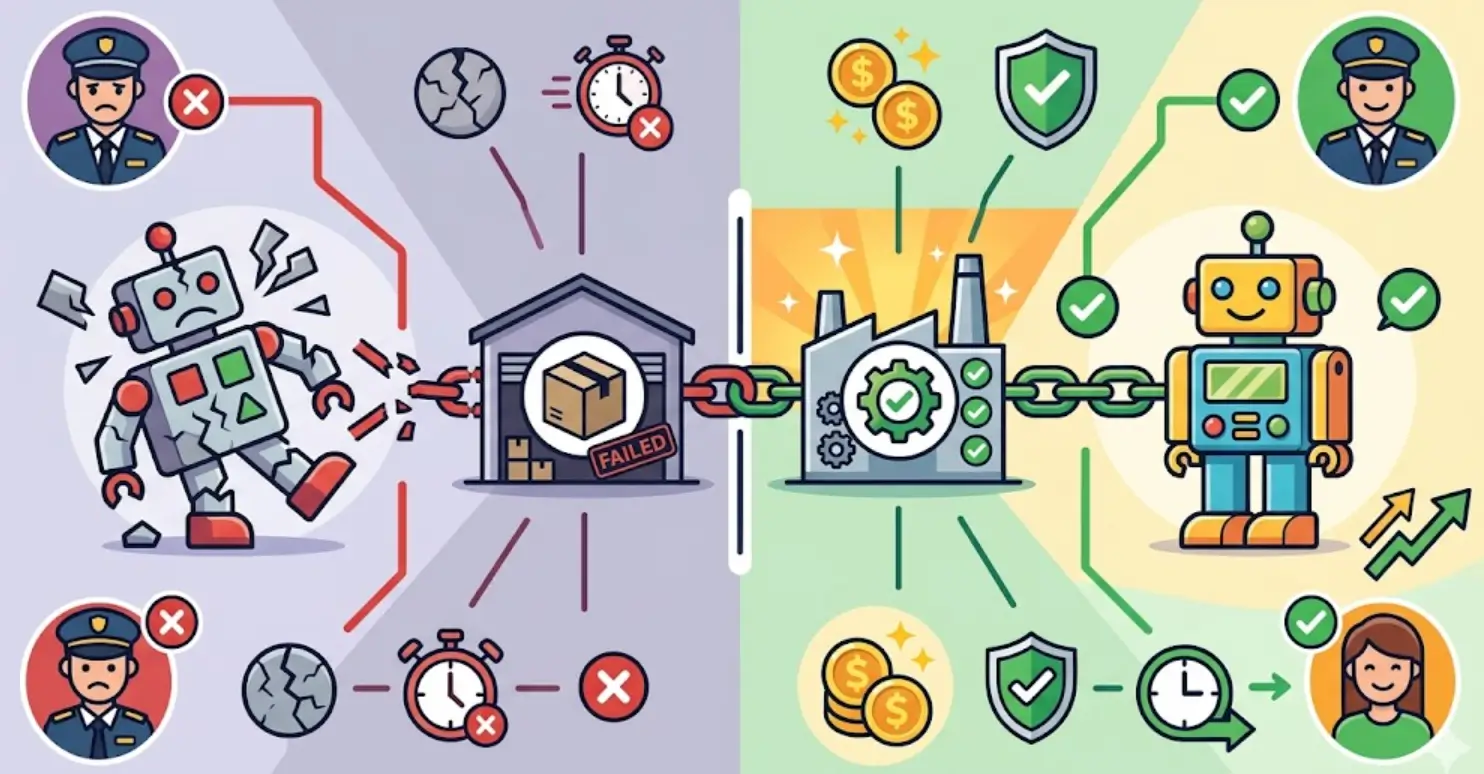
Certification problems can be even more devastating than quality issues, as they can stop your products from reaching the market entirely. Many buyers overlook the importance of matching certificates to their target markets, resulting in customs clearance failures that can cost thousands of dollars in delays and fees.
For the US market, all educational toys for 3–4 year olds must have a CPC (Children’s Product Certificate) and comply with ASTM F963 — a standard covering material safety, flammability, small parts, and chemical composition. Without a valid CPC tied to your specific product, your shipment will be held at US ports, and you may face fines from the Consumer Product Safety Commission (CPSC).
For the EU market, EN71 certification is mandatory, covering mechanical and physical properties (to prevent injuries from sharp edges or moving parts), flammability, and chemical safety (restricting harmful substances like heavy metals).
A supplier that provides a generic certificate instead of one tailored to your specific product or target region can leave your shipment stranded at the port, causing significant delays that may make you miss peak sales periods and lose market share to competitors.
Hidden Costs That Reduce Your Profit Margins in Toy Sourcing
Hidden costs are another silent profit killer that many new buyers fail to account for. Many buyers focus only on unit prices and ignore additional expenses such as customized packaging fees — especially if you require unique designs or eco-friendly materials — rework costs due to quality defects that need to be fixed before shipping, and storage fees from delayed deliveries that force you to pay for warehouse space.
There are also unexpected costs like import duties, which vary by country and can add 10–20% to your total cost, and inspection fees if you hire a third-party company to verify product quality. These costs can quickly add up, reducing your profit margins to a fraction of what you initially projected.
For example, a buyer who negotiates a $2 unit price but fails to account for $0.50 in packaging, $0.30 in certification fees, and $0.70 in shipping and duties may end up with a much lower profit than expected. That’s why experienced buyers don’t just compare products — they evaluate suppliers systematically, considering the full cost structure and long-term reliability.
What Buyers Really Look for in a 3–4 Year Old Educational Toys Supplier?
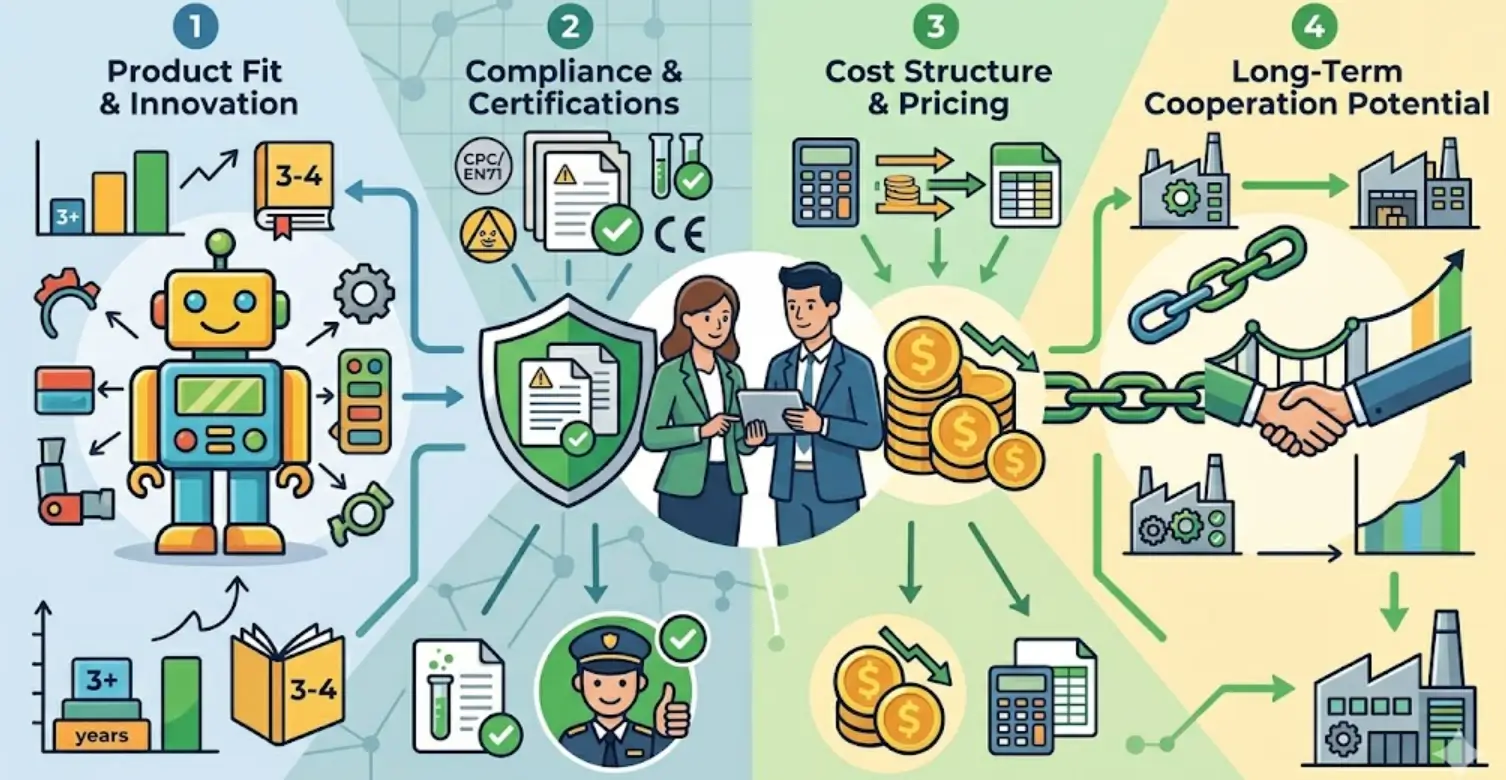
Professional buyers don’t choose suppliers randomly. They evaluate based on product fit, compliance, cost structure, and long-term cooperation potential — factors that ensure the supplier can meet their needs today and grow with their business tomorrow.
The following four core screening criteria separate reliable suppliers from the rest, helping you make informed decisions that align with your business goals, whether you’re a small retail store, an Amazon seller, or a large distributor.
These criteria are based on years of industry experience and address the most common pain points buyers face when sourcing educational toys for 3–4 year olds from China. By focusing on these areas, you can avoid costly mistakes and build a partnership with a supplier that helps you succeed.
Age-Appropriate Product Design (Not Just Educational Label)
Not all ‘educational toys’ are truly suitable for 3–4 year olds. This age group is in a critical stage of development, focusing on hand-eye coordination, basic logic skills (such as cause and effect), and color and shape recognition. Children at this age have short attention spans and limited fine motor control, so toys designed for them should be simple to operate, encourage hands-on exploration, and match their cognitive and physical abilities.
For example, puzzles that are too complex — with 50+ pieces or tiny parts — can frustrate children and reduce their interest in learning, while blocks that are too small (less than 2 inches in diameter) pose safety risks and are difficult for little hands to grasp and stack.
Similarly, toys with complicated instructions or those requiring advanced problem-solving skills will fail to engage 3–4 year olds, leading to low sales and negative feedback from parents.
A reliable supplier should understand these differences and recommend suitable designs — not just produce whatever you ask. They should have a deep understanding of educational toys for 3-4 year olds’ development, including the latest child development research and market trends.
For example, they might suggest adjusting the size of puzzle pieces to 3–4 inches for easier handling, or adding bright, contrasting colors to help children with color recognition. They should also be able to adjust product details such as size, complexity, and material to meet the specific needs of this age group, ensuring the toys are both educational and engaging.
A supplier that takes the time to understand your target market and offers expert recommendations is more likely to help you create products that sell well and build customer loyalty.
Safety Certifications (What You MUST Check Before Importing)
One of the biggest risks when sourcing preschool toys is certification mismatch. Different markets have strict safety standards, and failing to comply can result in shipment delays, fines, product bans, or even legal action. For the US market, all educational toys for 3–4 year olds must have a CPC (Children’s Product Certificate) issued by a third-party laboratory and comply with ASTM F963.
This standard covers a range of requirements, including material safety (ensuring no harmful chemicals like lead or phthalates), flammability (to prevent fire hazards), and small parts (to avoid choking risks for children under 3, which also applies to 3–4 year olds who may still put objects in their mouths).
Additionally, the CPC must include specific information about the product, the manufacturer, and the testing laboratory, and it must be readily available for inspection by customs officials.
For the EU market, EN71 certification is mandatory, and it has several parts that apply to educational toys. EN71-1 covers mechanical and physical properties, ensuring that toys have no sharp edges, pointed tips, or small parts that can be easily detached. EN71-2 covers flammability, restricting the use of materials that burn easily.
EN71-3 covers chemical safety, limiting the amount of heavy metals and other harmful substances in toys. It’s essential to ensure that the certificate applies to your specific product, not just the supplier’s general product line.
Some suppliers show valid certificates that do not apply to your specific product — for example, a certificate for a wooden toy does not cover a plastic version of the same toy, nor does a certificate for a single block set cover a set with additional accessories. This is a common trick used by unreliable suppliers to win orders, and it can lead to costly compliance issues.
Common pitfalls include using outdated certificates (many expire after 1–2 years) or certificates that do not match the product’s design or materials. For example, a certificate for a wooden block set does not apply to a plastic puzzle from the same supplier, even if the supplier claims it does.
Another common issue is certificates that are not issued by an accredited laboratory — customs officials will reject such certificates, leading to shipment delays. Always verify certification per product, not per supplier, and ask for a copy of the full certificate (not just a summary) to check for validity.
This attention to detail is crucial to avoiding toy safety certification issues and ensuring smooth importation with CPC certificate compliance. A reliable supplier will be transparent about their certification process and provide all necessary documents upon request.
MOQ, Pricing Structure & Hidden Costs
Price is not just about unit cost, but about the full cost structure. Understanding how MOQ affects pricing is key to making profitable decisions. Higher MOQ generally leads to lower unit price, while lower MOQ results in higher unit price because suppliers need to spread fixed costs such as mold fees, setup costs, and labor across fewer units. For example, a supplier may offer $1.80 per unit at 10,000 MOQ, but $2.50 per unit at 5,000 MOQ.
A lower MOQ is often suitable for small businesses or new market entrants who want to test demand with lower capital risk.
However, the higher unit price must still support healthy margins. In contrast, higher MOQ reduces unit cost but increases upfront investment risk if sales are uncertain. A reliable supplier helps balance MOQ with business scale and cash flow without compromising quality.
The full cost structure goes beyond unit price. It includes mold fees for customized designs, which can range from $500 to $5,000 depending on complexity. Packaging costs vary based on materials and customization, such as eco-friendly or branded packaging.
Certification costs for standards like CPC and EN71 typically range from $300 to $1,000 per product. Logistics costs, including shipping, insurance, and customs clearance, also significantly impact total spending.
FOB price is only part of the equation. The final landed cost includes shipping, import taxes (5%–25% depending on country), customs clearance fees, and storage charges. For example, a $2.50 FOB price can become a $4.20 landed cost after adding shipping, taxes, clearance, and storage fees.
Experienced buyers evaluate total landed cost rather than just quotation price, because true profitability depends on the complete cost structure, not the initial unit price alone.
Customization Capability (OEM / ODM for Market Differentiation)
In today’s market, selling generic toys means competing on price only — a race to the bottom that reduces profit margins and makes it hard to build a sustainable brand. To stand out and capture higher profit margins, you need products that are unique to your brand — products that customers can’t find anywhere else.
A reliable supplier should offer OEM educational toys and custom toys capabilities, including logo customization, packaging design, and gameplay adjustments. Logo customization is a simple but effective way to build brand recognition — adding your logo to the toy or packaging helps customers remember your brand and encourages repeat purchases. Customized packaging can make your products more appealing on retail shelves or Amazon listings, where eye-catching design can make the difference between a sale and a pass.
Logo customization helps build brand recognition while customized packaging can make your products more appealing on retail shelves or Amazon listings. Gameplay adjustments allow you to tailor products to your target market’s preferences, creating a competitive edge that sets you apart from generic brands.
For example, adapting a basic building block set to include themes popular in your region — such as local animals, cultural symbols, or popular children’s characters — can increase sales and brand loyalty. If you’re targeting the European market, you might add multilingual instructions or design toys that align with European early childhood education standards. For the US market, you might focus on toys that support STEM learning, a growing trend among parents. These small adjustments can make a big difference in how your products perform in the market.
These customization options not only help with market differentiation but also allow for a brand premium — customers are willing to pay more for products that are unique and aligned with their needs. A strong supplier should support product differentiation, not just production, helping you create products that resonate with your customers and drive long-term growth.
They should have a team of designers and engineers who can work with you to refine your ideas, test prototypes, and ensure that the final product meets your specifications and market demands. Whether you have a clear product idea or need help developing one, a reliable supplier will be your partner in creating a unique product line that stands out in the crowded preschool toy market.
Types of Educational Toys Suitable for 3–4 Year Olds (With Market Demand Insights)
Choosing the right product category is as important as choosing the supplier. Even the best supplier can’t make a product sell if there’s no market demand. The following three categories are in high demand for 3–4 year olds, offering strong market potential and healthy profit margins. These categories are based on current market trends, child development needs, and buyer feedback, and they have proven to be consistent sellers across different regions.
By focusing on these categories, you can reduce the risk of investing in products that don’t sell and increase your chances of building a successful product line. Additionally, these categories are versatile, allowing for customization and differentiation to meet the unique needs of your target market.
Building Blocks & Construction Toys
Building blocks and construction toys are consistently popular among 3–4 year olds because they support spatial cognitive development and hand-eye coordination — key skills for this age group. These toys are simple yet versatile, allowing children to create different structures (such as towers, houses, or cars) and explore their creativity.
They also have a low production cost, which translates to high profit margins for buyers — unit costs can range from $1 to $3, and retail prices can be $5 to $15 or more, depending on the size and complexity of the set. Building blocks are also durable, which means fewer returns and higher customer satisfaction. Parents appreciate that building blocks grow with their children — 3–4 year olds can start with basic stacking, and as they get older, they can create more complex structures, making the toy a long-term investment.
This category is widely used in both retail and educational channels, making it a versatile option for businesses targeting both parents and preschools. Preschools and early childhood education centers often purchase building blocks in bulk for classroom use, creating a steady demand for larger sets.
Retailers can sell smaller, more affordable sets for home use, while Amazon sellers can offer a range of sizes to cater to different customer needs. Whether sold as standalone sets or part of a larger educational kit, building blocks have a broad appeal and consistent market demand. They are also easy to customize — you can add your logo, change the colors, or include themed pieces to make your product unique. This versatility makes building blocks a top choice for buyers looking for a reliable, profitable product category.
Montessori Toys
Montessori toys are a fast-growing trend, especially in European and US markets, where parents are increasingly focused on child-centered education. The Montessori method emphasizes independent learning, hands-on exploration, and self-directed play, and Montessori toys are designed to align with these principles.
These toys are often simple, made from natural materials (such as wood or cotton), and focus on practical life skills (like pouring, sorting, or buttoning), sensory development (like textured surfaces or sound-making elements), and basic academic concepts such as numbers and letters. Unlike traditional toys that are often passive, Montessori toys encourage children to actively engage and learn through play, which resonates with modern parents who value educational value.
As a Montessori toys supplier, we understand that these products require strict adherence to Montessori principles and high-quality materials. Montessori toys must be durable, safe, and designed to be self-correcting — allowing children to learn from their mistakes without adult intervention.
For example, a Montessori shape-sorting toy will only allow the correct shape to fit into the corresponding hole, helping children learn through trial and error. The demand for Montessori toys continues to rise, driven by the growing popularity of Montessori education and parents’ desire to provide their children with toys that are both fun and educational. This category offers higher profit margins than generic toys, as parents are willing to pay a premium for high-quality, educational products that align with their values.
Sensory & Fine Motor Skill Toys
Sensory and fine motor skill toys are essential for 3–4 year olds as they help develop the small muscles in the hands and fingers (fine motor skills) and support sensory integration — the ability to process information from the five senses. These toys include items such as sensory bins (filled with materials like rice, sand, or water beads), textured balls, shape-sorting puzzles, and lacing toys. They engage multiple senses — touch, sight, sound, and even smell — making playtime more immersive and educational.
For 3–4 year olds, who are still developing their fine motor skills, these toys provide a fun way to practice tasks like grasping, pinching, and manipulating objects, which are essential for later skills like writing.
There is strong demand for these toys from preschools, early childhood education centers, and parents. Preschools often use sensory toys in their classrooms to support children with different learning styles and developmental needs. Parents appreciate that these toys are both fun and educational, helping their children develop important skills while playing.
They are often used in therapeutic settings as well, making them a versatile category with steady market demand. Choosing high-quality sensory toys ensures durability and safety, which are key factors for buyers in this segment.
For example, sensory bins should be made from non-toxic materials, and textured toys should have no sharp edges or small parts that can be detached. A reliable supplier will ensure that their sensory toys meet all safety standards and are designed to support the developmental needs of 3–4 year olds.
How to Evaluate a Reliable Educational Toys Supplier in China?
Even with all the criteria above, many buyers still struggle to identify a truly reliable supplier. The market is flooded with suppliers claiming to be the best, but many lack the experience, quality control, or transparency to deliver on their promises. The following three steps will help you distinguish between trustworthy suppliers and those that may cause problems down the line.
These steps are based on practical experience working with hundreds of buyers, and they focus on verifying the supplier’s capabilities, consistency, and communication. By following these steps, you can reduce the risk of working with an unreliable supplier and build a long-term partnership that helps your business grow.
Factory vs Trading Company: How to Tell the Difference?
One of the first things to clarify is whether you are working with a factory or a trading company. There are pros and cons to both, but understanding the difference is key to making the right choice. Factories often offer lower prices because they cut out the middleman, and they give you more control over production — you can visit the factory, inspect the production line, and make adjustments to the product design or quality standards.
Trading companies, on the other hand, may provide more flexible MOQs, handle logistics and documentation, and offer a wider range of products from multiple factories. To tell the difference, ask for a factory video tour to see the production line and manufacturing process — factories will be able to show you their facilities, while trading companies may only show you a warehouse or office.
You should also ask for product certification documents that include the factory’s name and address — trading companies may provide certificates that list their own name instead of the actual factory, which can be a red flag. Additionally, verify the production capacity to ensure they can meet your order requirements — factories will have specific production lines and capacity numbers, while trading companies may be vague about their capabilities.
This difference often explains large price gaps, as trading companies add a markup (usually 10–20%) to cover their own costs, including sourcing, logistics, and customer service. If you’re looking for the lowest price and have a large order, a factory may be the best choice. If you need flexibility and support with logistics, a trading company may be a better fit.
Sample Quality vs Bulk Production Reality
A common mistake buyers make is assuming that sample quality reflects bulk production reality. Many suppliers provide high-quality samples — using premium materials, strict quality control, and careful craftsmanship — to win orders, but cut corners when producing large orders to save costs. This can include using cheaper materials (such as low-grade plastic instead of food-grade plastic), reducing product thickness, skipping quality control checks, or using less durable paint. These shortcuts can lead to significant discrepancies between the sample you approved and the final products you receive, resulting in defective products, returns, and lost profits. For example, a sample block set may be made from thick, smooth wood, but the bulk order may use thin, rough wood with splinters.
To avoid this, request pre-shipment inspection (PSI) or production samples. Pre-shipment inspection involves hiring a third-party company to visit the factory and inspect a random sample of the bulk order before it is shipped. This ensures that the products meet your quality standards and match the approved sample. Production samples are a small batch of products from the bulk order that the supplier sends to you for approval before shipping the entire order.
This allows you to check the quality firsthand and request changes if needed. Working with a supplier that has a strict quality control process and is willing to provide production samples or allow pre-shipment inspection shows their commitment to consistency and transparency. A reliable supplier will have nothing to hide and will be happy to demonstrate that their bulk production matches the sample quality.
Communication Efficiency & Responsiveness
Communication efficiency and responsiveness are key indicators of a reliable supplier. When sourcing from China, time zones and language barriers can create challenges, so working with a supplier that communicates clearly and promptly is essential. A good supplier should respond to your inquiries promptly, usually within 24 hours, even on weekends or holidays. They should have strong English communication skills to avoid misunderstandings — ambiguous or unclear communication can lead to incorrect product designs, delayed orders, or quality issues.
They should also be proactive in providing updates on production progress, such as when production starts, when it will be completed, and when the shipment will be sent. This proactive communication helps you plan your inventory and marketing strategies effectively.
Good communication often prevents costly mistakes such as incorrect product designs or delayed shipments. For example, if a supplier notices a problem with the product design or a delay in production, they should alert you immediately so you can make adjustments or adjust your timeline.
A supplier that takes the time to understand your needs and provides clear feedback is more likely to deliver a smooth sourcing experience. They should also be willing to answer your questions and provide detailed information about the production process, materials, and certification. If a supplier is unresponsive, vague, or unwilling to communicate openly, it’s a red flag that they may not be reliable. Communication is the foundation of a successful partnership, so choose a supplier that values clear, timely communication.
Common Mistakes When Sourcing Educational Toys for the Preschool Market
Many buyers make avoidable mistakes when sourcing educational toys for the preschool market, often leading to financial losses and business disruptions. One of the most common mistakes is focusing solely on price.
Buyers are often tempted by the lowest quotation, but this can lead to quality issues as suppliers may cut corners to offer lower prices. For example, a supplier offering a $1 unit price may use low-quality materials that result in defective products, leading to returns, negative reviews, and lost sales.
The cost of these issues is often much higher than the savings from the lower unit price.
Another common mistake is ignoring certification requirements. Buyers may assume that a supplier’s generic certificate is sufficient, only to find out that it doesn’t match their target market, leading to customs clearance failure and costly delays that may make them miss peak sales periods.
Underestimating delivery time is another frequent error. Many buyers fail to account for production lead times, which can be 3–6 weeks for standard orders and longer for customized products, shipping times of 2–8 weeks for sea freight or 3–7 days for air freight, and customs clearance processes of 1–2 weeks.
This often results in stockouts during peak seasons and missed sales opportunities. For example, if products intended for Christmas arrive after the season, the inventory becomes difficult to sell.
These sourcing mistakes can be avoided by adopting a systematic supplier evaluation approach, focusing on long-term value rather than short-term pricing, and working with reliable suppliers who are transparent about costs, certification, and delivery timelines.
How the Right Supplier Helps You Increase Profit, Not Just Reduce Cost?
The goal of sourcing is not just to reduce cost, but to increase profit. Many buyers focus only on cutting expenses, but a reliable supplier can deliver far greater long-term value. A reliable supplier increases profit in three key ways.
First, stable quality drives customer satisfaction and repeat purchases. When products are durable, safe, and engaging, customers are more likely to buy again and recommend your brand to others, strengthening long-term sales. For example, if a parent buys a building block set and is satisfied with the quality, they are more likely to choose your brand again and recommend it to friends and family. This word-of-mouth effect supports steady revenue growth.
Second, better product design enables higher selling prices. A supplier who understands market trends and supports unique, age-appropriate customization helps you differentiate from competitors and charge a premium. For example, a customized Montessori toy with your brand logo can sell at a higher price than a generic version, as customers are willing to pay more for uniqueness and value.
Finally, fewer production and logistics issues reduce hidden costs. Reliable suppliers minimize rework, delays, and returns, saving money on storage, corrections, and lost sales, which improves overall margins.
This is why experienced buyers focus on long-term supplier value rather than short-term pricing. A good supplier acts as a business partner, supporting customization, compliance, and sustainable growth, ultimately improving profitability over time.
Get a Reliable Educational Toys Supplier for Your 3–4 Year Old Product Line
If you are sourcing educational toys for 3–4 year olds, you need a supplier that understands your market, your needs, and the unique requirements of this age group. You don’t just need a supplier that can produce toys — you need a partner that can help you succeed.
We support OEM customization, certification compliance, and stable production, ensuring that your products meet the highest safety standards and resonate with your target customers. Whether you need a standard product line or a fully customized solution, we have the experience, expertise, and resources to deliver.
We use high-quality, child-safe materials, implement strict quality control checks at every production stage, and provide transparent pricing with no hidden fees.
We have years of experience working with buyers around the world, helping them navigate the complexities of sourcing from China and achieve their business goals. We’ve helped small retailers, Amazon sellers, and large distributors build successful product lines that sell well and generate consistent profits.
Our team of experts understands the unique needs of the preschool toy market, and we’re committed to providing you with the support and guidance you need every step of the way. Tell us your target market, your budget, and your product goals, and we can suggest suitable products and pricing options tailored to your specific needs.
We’re here to help you find the right products, avoid common sourcing mistakes, and build a long-term partnership that drives your business forward.